


With about 4.5 billion email users worldwide and growing, it should come as no surprise that email marketing is still one of the most valuable channels for reaching current customers and your target audience. But there’s a right way to do email marketing, one that keeps you compliant, drives ROI, and builds the kind of brand loyalty that’s hard to come by with other channels.
What Is Email Marketing?
Email marketing is when a company, business, or organization uses email to share news, promotions, and build loyalty with customers or prospects.
Unlike other forms of marketing or paid efforts, email marketing is fully owned by those creating the emails. No algorithms, Google updates, or other outside factors that can impact performance.
How to Use Email Marketing for Your Business
Build Your List
Your email marketing efforts are only as good as your audience list. Don’t skimp on this part of the process, or you’ll end up with low engagement, high unsubscribe rates, or even spam reports.
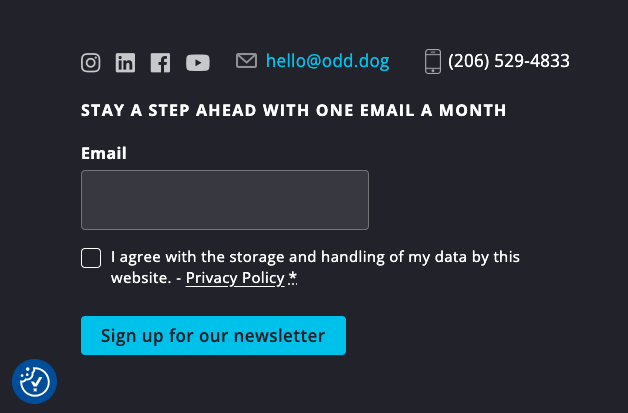
Set up a comprehensive infrastructure that allows users to opt in, voluntarily sign up to receive your emails, and ensures the unsubscribe process is straightforward. This keeps your list full of members who actually want to be there and protects your sender reputation. Most email regulations (like the CAN-SPAM Act in the U.S.) require clear opt-in and opt-out options, so getting this right isn’t just good practice, it’s compliance.
We recommend adding a sign-up option to your website and auditing past email lists to ensure you start with a clean, up-to-date audience with the infrastructure in place to grow. While it may be tempting to upload an existing customer list or other users who may not have given consent to receive emails, you will face low engagement rates, spam reports, and could even face account bans.
Segment Your Audience
Once you’ve built your subscriber list, it’s important to segment it so your emails stay relevant to each audience. Segmenting an email audience list means sorting your audience by commonalities or a shared category. Most email management tools provide easy segmentation, allowing you to “tag” each contact with their corresponding segment and then send emails to only that segment when needed.
For example, if you offer both B2B and B2C services, you may want to segment based on business contacts versus individuals. That way, you can tailor content to what’s actually relevant to each group. A newsletter discussing commercial property taxes probably isn’t relevant to a residential homeowner.
Top tip: when asking users to sign up for your newsletter, give them the option to self-identify into a segment (business owner, supplier, customer, etc.). There’s no more accurate way to segment your list than letting your audience do it themselves.
Determine Your Goals
Before you start designing templates, think through what you actually want your email marketing to accomplish. Are you building and maintaining relationships with existing customers? Driving referrals? Increasing website traffic or sales? Each goal calls for different content, calls to action (CTAs), and email send frequency.
For customer relationships, you may prioritize birthday emails, soft CTAs about new products, or “insider” announcements ahead of a sale. To drive traffic or sales, you might lean more promotional, with abandoned-cart automations, strong CTAs, and frequent promo codes.
Plan a Content Calendar
Based on your goals, map out a sending cadence you can realistically sustain. Is once a month enough, or should you send more or less often? This takes some trial and error, and some honest internal reflection: do we have enough valuable content or the bandwidth to send a newsletter every month? If you’re not sure, extend the cadence; every newsletter should provide true value, not just check a box.
Beyond having enough content, find the balance between providing value to your subscribers and burning them out. To stay top-of-mind doesn’t mean being in their inbox every single day.
At the end of the day, we recommend keeping an eye on open rates and overall engagement in your emails to gauge whether you’re maybe doing too much on the email marketing front.
Set Up Automations
Almost all email marketing platforms let you set up automations; emails that go out automatically when a subscriber hits a specific point in their customer journey.
The most common example is a “Welcome” email when someone joins your list. You’ve probably received one yourself! A good welcome email does double duty: it confirms to people that they’ve opted in (which helps prevent future unsubscribes by giving them an easy and early off-ramp), and it’s a natural moment to offer something of value. For example, a discount on their next purchase, or a note from your CEO about your company’s mission.
Write and Design Campaigns
If you don’t have a brand guide yet, let’s talk. Brand cohesion matters in email marketing. Since many emails link directly to your website (a product page, new blog post, etc.), your email design should flow naturally into your site.
Consistent fonts, colors, and brand voice create a cohesive brand image and a smoother experience for readers of your emails.
Track Performance and Interate
As with any marketing channel, tracking performance and testing new approaches is essential to improving results over time. A few things worth watching:
- Open rate: the percentage of delivered emails that recipients actually open.
- Which subject line drove the highest open rate over the past 6 months, and how did it differ from others?
- Unique clicks: the total number of individual people who clicked a link in your email, counting each person once, even if they clicked multiple times or multiple links.
- Which CTAs got the most clicks, and is there a pattern?
- Click-through rate (CTR): the percentage of people who clicked a link, out of everyone who received (or opened) the email.
- Which topics drove the highest CTR? That might signal a topic worth revisiting from a different angle.
- Unsubscribes & unsubscribe rate: the number of people who unsubscribed from an email, and what percentage of recipients that represents.
- Which emails drove the most unsubscribes? Was the topic too niche or irrelevant to part of your list?
As your list grows, what “works” may shift. Keep an eye on performance and subscriber count, and adjust your design, CTAs, and content topics accordingly.
What Are the Best Email Marketing Platforms?
Having your email platform integrated with your customer relationship management (CRM) system can be a huge help in managing your email marketing efforts; some CRMs even have an email platform built in.
If you’re looking for a recommendation, we’ve found that Mailchimp and HubSpot are both strong options.
We recommend Mailchimp as the go-to introductory platform. It’s user-friendly, offers straightforward automation guidance, is highly customizable, and makes audience management easy. It integrates with CRMs, but in our experience, not all of those integrations are seamless, and some require manual oversight.
If you’re managing a larger list, HubSpot is worth a look. It’s a bigger investment than Mailchimp, but it also serves as a CRM, making it a strong all-in-one option for managing new audience members. It offers more robust customization than Mailchimp, along with automation support and advanced reporting.
There are many other email marketing platforms, and we recommend evaluating multiple options before deciding which works for you.
When to Bring in an Email Marketing Expert
If you’ve read this far, you’re probably realizing that email marketing is easier said than done. Between platform setup, strategy, segmentation, copywriting, design, and reporting, it’s a lot to run well on top of everything else on your plate, which is why an email marketing expert can offer support.
A few signs it might be time to bring in help:
- Your subscriber list has stagnated, and you’re not sure how to grow it
- You don’t have the bandwidth to maintain a consistent sending calendar
- Open rates and engagement have gone flat despite your best efforts
- You’re managing everything manually, and automations feel out of reach
Odd Dog’s email marketing services cover the full picture: platform setup and organization, campaign strategy and calendar planning, email design and copywriting, list segmentation and automation, and ongoing performance reporting. We’re not just helping you send emails, we’re running a full strategy.
If you’re planning to call in for backup, we’d recommend reviewing our “Questions to Ask a Marketing Agency” blog to go into the hiring process with confidence.
Getting Started with Email Marketing
If you’re ready to begin your email marketing journey, there’s no better time than the present. Start by picking a platform that fits your needs, import any existing opted-in audience members, and get a newsletter sign-up option set up on your website (we can help with that, too).
Think through your goals and get a sense of what topics you want to focus on. And if you want support getting started, our team is here to help.