


Cookie Compliance and Google Analytics Consent Mode
Five years ago, as a young marketer at Odd Dog, the only cookies I worried about were whether I should grab a PCC Bakery snickerdoodle at lunch — or double down and throw a chocolate chip into the mix.
Now, cookies have infiltrated the forefront of marketing discourse and have real-world implications on browsing privacy, analytics accuracy, and those compliance pop-ups you have to click before shopping for that Hawaiian shirt you’ve had your eye on. Privacy compliance and cookie consent shape the future of how marketers collect, analyze, and interpret marketing data online.
What Are Cookies on the Web?
Understanding how to approach Google Analytics’ privacy considerations requires first understanding what cookies are, the different types, and how they operate. Cookies are small text files stored in your web browser by websites to remember information about your visit. They help inform websites about you, enabling them to personalize the experience.
(And before you ask — no, Brits do not call them “web biscuits.” Trust me, that was the first avenue of research I went down.)
Are Website Cookies Bad?
There are a plethora of cookies you’ll encounter while browsing. However, contrary to the negative connotations around them, not all of them are nefarious, data-hungry vampires built solely to force-feed you ads for that Hawaiian shirt you still haven’t bought.
Broadly speaking, cookies can be divided into first-party and third-party. A fitting analogy comes from insects like bees and wasps. To the layman, both are flying, striped, stinging creatures. But — like first-party cookies — bees are generally considered beneficial.
First-Party Cookies
First-party cookies are designed to improve the user experience on a specific website. The site you are on creates them when you’re actively browsing. First-party cookies are responsible for remembering the login info you scribbled on a Post-it and then accidentally tossed in the trash. You can thank them for keeping items in your shopping cart after you close a tab mid–Hawaiian shirt purchase, or for remembering your language preferences. Not to be outdone in usefulness, bees are responsible for pollinating one-third of our food supply.
Third-Party Cookies
On the other hand, wasps are the striped stinging scourge of summertime picnics. Likewise, third-party cookies may be responsible for your data ending up in the hands of Cambridge Analytica. Unfortunately, marketers still rely on third-party cookies daily — albeit on a much smaller, far less abhorrent scale. These cookies are placed by third parties apart from the site you’re actively visiting, such as a LinkedIn Insight tag or a TikTok pixel. Their typical uses include cross-domain tracking, retargeting, and serving ads. Sound familiar? That’s basically a checklist of what digital marketers do daily.
Website Cookie Compliance
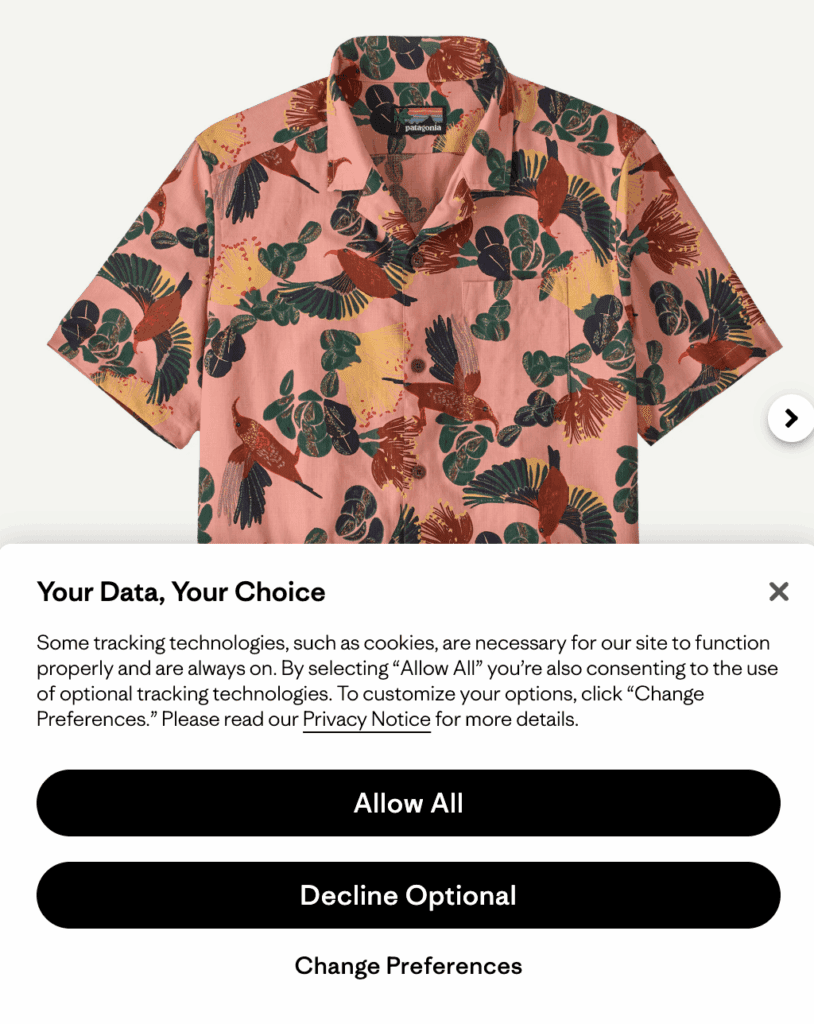
Website cookie compliance ensures that a site’s use of cookies aligns with data privacy laws by informing users about cookies and obtaining their explicit consent for third-party cookies. Most of the time, this takes the form of a pop-up banner the first time you land on a site.
The specific laws depend on where the user is located. In the European Union, compliance means adhering to GDPR (General Data Protection Regulation). In the United States, data privacy laws vary by state: in California, the CCPA applies, while here in Washington, we now have WaPA.
Disclaimer: I am not a lawyer; this is not legal advice.
Google Analytics and Cookie Compliance
Unlike Universal Analytics — an outdated tracking compliance headache — GA4 (Google Analytics 4) was built with privacy in mind. Google even touts GA4 as cookieless.
Cookieless (adj.)
1: without cookies
Confusing? A little. Because in practice, “cookieless” doesn’t mean GA4 skips cookies entirely; it just means GA4 doesn’t rely on third-party cookies. Instead, it uses first-party cookies and data modeling to stitch together a more complete dataset.
Under GDPR, the rules are crystal clear: you must obtain explicit consent from visitors before firing Google Analytics cookies. In the U.S., the laws are more lenient. For example, under CCPA, you don’t need explicit consent, but you do need to disclose the types of cookies used and provide visitors with the option to opt out of non-essential cookies.
Google Analytics Consent Mode
In the rush to implement consent banners and make websites compliant, the effect on data quality and volume in GA4 is often overlooked. If a consent banner is installed, you can lose roughly 40% of tracked website sessions overnight. That’s not a rounding error — that’s a massive void in your data.
This is where Google Analytics Consent Mode comes in. Consent Mode bridges the gap between compliance and data quality by adjusting how GA4 (and Google Ads) behave based on a user’s consent choices.
- When consent is granted: GA4 collects data normally through first-party cookies.
- When consent is declined: GA4 switches into “cookieless” mode. Instead of dropping cookies, it uses conversion modeling to estimate the behavior of users who opt out, filling in the missing pieces so marketers don’t lose all visibility.
In practice, Consent Mode doesn’t magically give you a complete dataset — but it does help maintain directional accuracy and attribution consistency across campaigns.
Why This Matters for Marketers
Cookie compliance isn’t just about being a law-abiding internet citizen (though nobody wants a surprise letter from the EU). It’s about future-proofing your analytics. We’re moving toward a privacy-first internet, and the marketers who adapt early will have cleaner datasets, stronger customer trust, and fewer headaches when regulations tighten further.
Instead of fighting the tide, savvy marketers utilize tools like GA4 and Consent Mode to strike a balance between compliance and performance. You can still get actionable insights without resorting to shady tracking — and you’ll sleep better at night knowing your Hawaiian shirt shopping habits aren’t being auctioned off to the highest bidder.